How Social Media Shapes Our Inner Calm
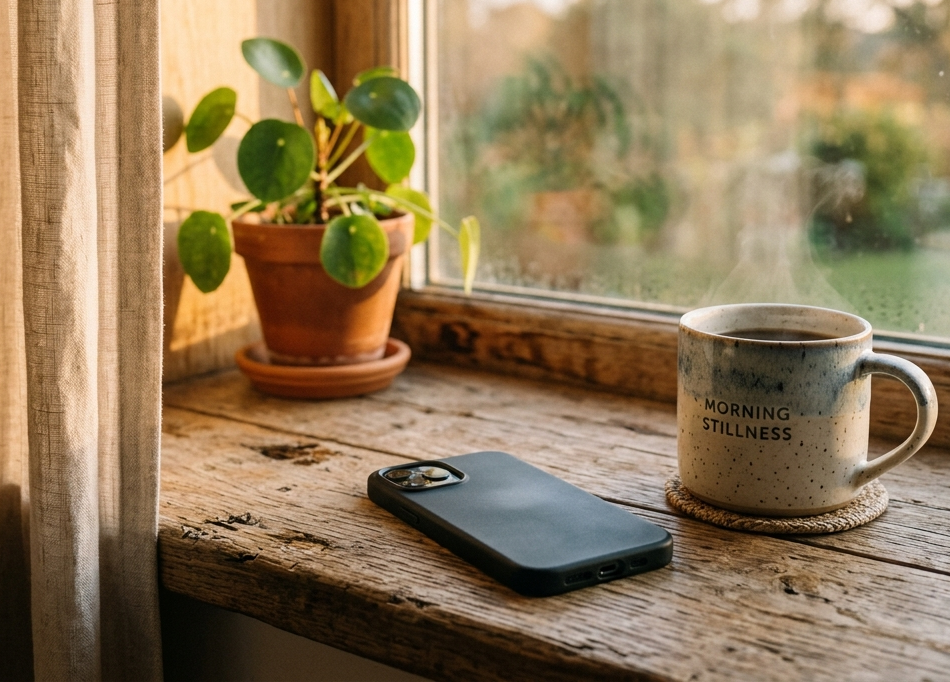
This is not an essay arguing that social media is good or bad. It is a record of what I noticed during a quiet six-month experiment in my own scrolling. I am a slow magazine writer, not a researcher. But I do read — and I have spent enough hours with WHO digital well-being briefs and Harvard public-health newsletters to recognise a pattern in my own days. The pattern was this: my inner calm and my feed were tied together more tightly than I had admitted.
Why feeds get under the skin
According to specialists who study digital habits, modern feeds are designed around novelty and comparison — two of the most effective triggers for an alert brain. When we open an app, we are not really opening one thing; we are opening hundreds of micro-doors into other people's lives. That is a remarkable, almost magical fact. It is also a quiet load that we carry into our evenings without naming it.
A feed is not a window. It is a hundred windows, all open at once, all blowing a different wind.
What I noticed during my six months
I started by writing down, in plain words, how I felt in the ten minutes after closing each app. The notes were boring and, for that reason, useful. Patterns appeared:
- Image-heavy feeds left me restless and slightly dissatisfied with the room I was sitting in.
- Short video feeds left me alert, talkative and unable to focus for the next half hour.
- Text-based feeds left me opinionated and a little argumentative, even when I was alone.
- Direct messages with close friends left me calm and warm — a different category entirely.
Nothing here is dramatic. But naming it changed the way I used my phone. I started reaching for the calming channels — voice notes from one friend, a writing community I trust — and stepping back from the rest.
Six small habits that quieted my feed
Move apps off the home screen
The two extra taps create a tiny moment of choice. In my experience, that moment is often enough to redirect the impulse.
Choose a window, not a stream
I check feeds during two short windows: late morning and early evening. Outside those windows, the apps are simply not opened.
Curate the first ten seconds of your day
The first ten seconds of attention belong to me. A glass of water, a stretched arm, an opened curtain — before any screen.
Unfollow generously
If an account consistently leaves me tense or unkind to myself, I unfollow without explanation. Generally promotes a softer feed within two weeks.
Replace scrolling with a small ritual
I keep a paperback in the same spot where I used to leave my phone. The hand reaches for whichever object is closer.
End the night with a wind-down hour
Sixty minutes without screens before bed. The first week is uncomfortable. The second week, I started sleeping differently.
What “inner calm” means here
I do not mean a permanently quiet mind. I mean a baseline where I can hear myself think between inputs. According to writers at the WHO on digital well-being, that baseline is something we can deliberately protect — and most of the protection happens in small, repeatable choices, not in dramatic detoxes.
The comparison trap, named gently
The hardest part of my experiment was admitting how often I compared myself. Not in obvious “I want her apartment” ways, but in subtle “everyone is moving forward except me” ways. Research indicates that this kind of upward social comparison is one of the more reliable mood-shifters of modern life. Naming it — out loud, to a friend, in writing — took most of its power away.
You cannot fairly compare the inside of your life to the outside of someone else's. Most of social media is the outside.
What I kept and what I let go
I kept a small writing community where people share their drafts. I kept voice notes with two friends who live in different time zones. I kept one account that posts only photographs of light on water. I let go of three apps entirely, and uninstalled them from my phone — the desktop version stayed, which gave me a healthier kind of distance.
A short reflection on what this is really about
This essay is not about phones. It is about who we want to be when we are not performing. Generally helps to remember that no one is watching us for as long as we imagine. The audience inside our head is usually one person: us. Self-care, in this context, looks like a quiet promise — “I will protect the room inside me from too many voices, so I can still hear my own.”
About the author
Read also
Letters from Sportpace
One slow, thoughtful letter a month: rituals, recommendations and quiet observations on self-care. No noise.