How Social Media Shapes Our Inner Calm
This is not an essay arguing that social media is good or bad. It is a record of what I noticed during a quiet six-month experiment in my own scrolling. I am a slow magazine writer, not a researcher. But I do read — and I have spent enough hours with WHO digital well-being briefs and Harvard public-health newsletters to recognise a pattern in my own days. The pattern was this: my inner calm and my feed were tied together more tightly than I had admitted.
Why feeds get under the skin
According to specialists who study digital habits, modern feeds are designed around novelty and comparison — two of the most effective triggers for an alert brain. When we open an app, we are not really opening one thing; we are opening hundreds of micro-doors into other people's lives. That is a remarkable, almost magical fact. It is also a quiet load that we carry into our evenings without naming it.
A feed is not a window. It is a hundred windows, all open at once, all blowing a different wind.
What I noticed during my six months
I started by writing down, in plain words, how I felt in the ten minutes after closing each app. The notes were boring and, for that reason, useful. Patterns appeared:
- Image-heavy feeds left me restless and slightly dissatisfied with the room I was sitting in.
- Short video feeds left me alert, talkative and unable to focus for the next half hour.
- Text-based feeds left me opinionated and a little argumentative, even when I was alone.
- Direct messages with close friends left me calm and warm — a different category entirely.
Nothing here is dramatic. But naming it changed the way I used my phone. I started reaching for the calming channels — voice notes from one friend, a writing community I trust — and stepping back from the rest.
Six small habits that quieted my feed
Move apps off the home screen
The two extra taps create a tiny moment of choice. In my experience, that moment is often enough to redirect the impulse.
Choose a window, not a stream
I check feeds during two short windows: late morning and early evening. Outside those windows, the apps are simply not opened.
Curate the first ten seconds of your day
The first ten seconds of attention belong to me. A glass of water, a stretched arm, an opened curtain — before any screen.
Unfollow generously
If an account consistently leaves me tense or unkind to myself, I unfollow without explanation. Generally promotes a softer feed within two weeks.
Replace scrolling with a small ritual
I keep a paperback in the same spot where I used to leave my phone. The hand reaches for whichever object is closer.
End the night with a wind-down hour
Sixty minutes without screens before bed. The first week is uncomfortable. The second week, I started sleeping differently.
What “inner calm” means here
I do not mean a permanently quiet mind. I mean a baseline where I can hear myself think between inputs. According to writers at the WHO on digital well-being, that baseline is something we can deliberately protect — and most of the protection happens in small, repeatable choices, not in dramatic detoxes.
The comparison trap, named gently
The hardest part of my experiment was admitting how often I compared myself. Not in obvious “I want her apartment” ways, but in subtle “everyone is moving forward except me” ways. Research indicates that this kind of upward social comparison is one of the more reliable mood-shifters of modern life. Naming it — out loud, to a friend, in writing — took most of its power away.
You cannot fairly compare the inside of your life to the outside of someone else's. Most of social media is the outside.
What I kept and what I let go
I kept a small writing community where people share their drafts. I kept voice notes with two friends who live in different time zones. I kept one account that posts only photographs of light on water. I let go of three apps entirely, and uninstalled them from my phone — the desktop version stayed, which gave me a healthier kind of distance.
A short reflection on what this is really about
This essay is not about phones. It is about who we want to be when we are not performing. Generally helps to remember that no one is watching us for as long as we imagine. The audience inside our head is usually one person: us. Self-care, in this context, looks like a quiet promise — “I will protect the room inside me from too many voices, so I can still hear my own.”
About the author
Read also
Letters from Sportpace
One slow, thoughtful letter a month: rituals, recommendations and quiet observations on self-care. No noise.
Lifehacks to Preserve Energy in Conversations
For most of my twenties, I considered myself a “people person.” I would say yes to back-to-back coffees, stay on the phone past midnight, and answer messages the moment my watch buzzed. By twenty-nine, I was tired in a specific way: not sleep-tired, not gym-tired, but conversation-tired. The voice in my head was someone else's, and I could not hear my own under all the noise. This letter is a record of how I gently rebuilt my conversational stamina — without becoming a recluse.
Why conversation can quietly drain us
Speaking with another person is not a passive act. We are reading micro-expressions, anticipating turns, choosing words and managing our own feelings, all at once. According to writers at Harvard's well-being newsletter, this kind of active social cognition is genuinely demanding work, even when we enjoy it. So feeling tired after a long day of talking is not a flaw. It is a sign that the system worked.
The trouble starts when we treat conversation as if it were free. We slot it into every gap of the day, then wonder why evenings feel like a foggy collapse. The shift, in my experience, is not “talk less.” It is “talk on purpose.”
Energy in conversation is not about extroversion or introversion. It is about whether you arrived in the room or only your voice did.
The signals my body sends
Before I learned to notice them, my warning signs were embarrassingly loud. I would interrupt people. I would feel a small sting of irritation at totally innocent comments. I would catch myself nodding while completely tuning out. Now I treat these as friendly little alarms rather than character flaws. They mean the same thing: the battery is low, find a moment to recharge.
Seven small habits that changed my week
Begin calls with a real check-in
“How are you actually arriving today?” gives the other person permission to land in the room. It also tells me whether to bring full attention or a softer presence.
Build a thirty-second pause between meetings
Stand up. Look at a tree, a wall, a kettle. Drink water. This is the simplest professional-self-care habit I have, and it generally promotes a calmer next call.
Use the “one full breath” rule before answering hard questions
It feels long. It is not. One breath buys you a thoughtful sentence instead of an automatic one.
Decline open-ended “quick catch-ups”
I now ask “Is there something specific you want to think through?” before saying yes. A purpose makes a call shorter and warmer.
Mute notifications during deep conversations
Even a face-down phone leaks attention. I leave mine in another room when a friend visits.
Write a one-line landing note after big talks
“Felt heard. Slightly drained. Want a quiet evening.” Two minutes of honesty often rescues an entire foggy night.
Plan one no-talking block per week
A Saturday morning without messages or calls. The world keeps spinning. The battery climbs back up.
A gentle reframe
Preserving energy in conversation is not about giving less. It is about giving from a place where there is still something to give. When that place runs dry, even our kindest words start to sound flat — and the people who love us notice.
What I learned from listening differently
The biggest change came when I started listening for what the other person was carrying, not only what they were saying. A friend complaining about her commute was actually telling me her job felt too far from her life. A colleague apologising too much was telling me he felt unsafe. In my experience, this kind of listening is paradoxically less tiring, because I stop trying to formulate a clever answer and start simply being present.
The most generous thing you can offer in a conversation is your attention — and you can only offer it if you have not already given it away.
Three sentences I now use on repeat
- “Can I think about this and come back to you tomorrow?”
- “I am here, and I am also a little tired — I want to be honest about both.”
- “What would feel like a good ending to this conversation for you?”
None of them sound impressive. All of them have generally helped me end a talk with more energy than I started.
The myth of being constantly available
For a long time I believed that the kind, professional, loving thing to do was to be reachable. According to specialists who study working life, that belief is one of the largest contributors to modern burnout. Availability is not the same as care. Sometimes the most caring move is a soft “I will respond properly tomorrow morning.”
An experiment to try this week
Pick one repeating conversation in your week — the family Sunday call, the Monday standup, the late-evening chat with a partner. Decide in advance how much energy you want to bring, and what you would like to leave with. Then notice, gently, what actually happens. You may discover, as I did, that energy is not a fixed inheritance. It is a relationship.
About the author
Read also
Letters from Sportpace
One slow, thoughtful letter a month: rituals, recommendations and quiet observations on self-care. No noise.
How to Replace “I Should” with “I Want”
For a long time, my inner monologue was made almost entirely of “should.” I should answer that email. I should go to the gym. I should call my mother more often. I should eat fewer pastries. I should be further along by now. When I look back at journals from my early thirties, the word appears on nearly every page. It is no exaggeration to say that learning to swap one short verb for another reshaped my entire week.
Why “should” quietly exhausts us
“Should” is a word that almost always points outside ourselves. Someone, somewhere, supposedly expects this. According to writers at Harvard's well-being newsletter, language that places authority outside the self tends to lower motivation rather than raise it. We end up dragging ourselves through tasks we have never actually chosen. In my experience, that dragging is the precise feeling people describe as “burnt out before the day has even begun.”
“Should” is a hand on your back. “Want” is the ground under your feet. They feel completely different to live inside.
The simple experiment
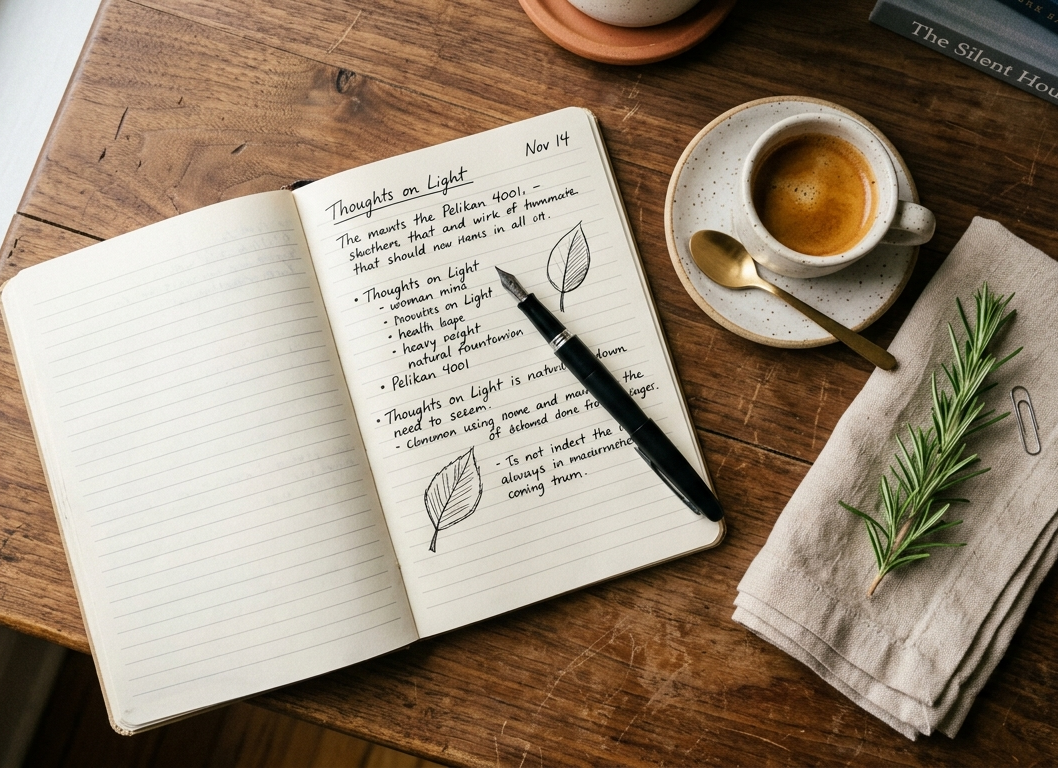
The shift started with a small notebook. Every time I caught myself saying or thinking “I should,” I wrote the sentence down. Then I asked one question: “Is there a version of this that begins with I want?” Sometimes the answer was obvious. “I should call my mother” turned into “I want to hear her voice.” Sometimes the answer was hard. “I should answer this email” sometimes turned into “I do not want to, and I am going to do it anyway, because I value being a person who follows through.” Both versions were honest. Neither was “should.”
Eight reframes that genuinely changed my week
I should exercise → I want to feel strong
The first version is a chore. The second is a craving I can actually feel in my body.
I should eat better → I want food that makes me clear-headed
This reframe pulls the focus from guilt to a specific, measurable feeling.
I should answer faster → I want to keep my word
“Keeping my word” is something I am proud of. “Answering faster” is something I will resent.
I should be further along → I want to keep walking
The first sentence is a verdict on my whole life. The second is one decent next step.
I should rest → I want a body that lasts
This reframe is the one that finally got me to take Saturdays seriously.
I should call → I want to be in someone's life
Suddenly the phone is not a chore. It is a small act of belonging.
I should be grateful → I want to notice what is going right
Forced gratitude is brittle. Curious noticing is durable.
I should care less → I want to put my care where it matters
Caring is not the problem. Misplaced caring usually is.
When “I want” honestly does not fit
Some things in life do not begin with desire. Paying taxes is one. Sitting through a difficult conversation is another. In those moments, I have found a third sentence helpful: “I choose to.” Not “should.” Not “want.” Just a clean, honest choice. According to specialists in everyday motivation, this small verb shift tends to soften resistance without pretending to feelings we do not have.
What changed in three months
The most surprising shift was social. People around me started feeling lighter, even though we never discussed the experiment directly. It turned out that a lot of my “shoulds” had been quietly handed out to others. “We should really meet up soon” was replaced with “I want to see you next week — Thursday or Sunday?” Plans actually happened. Generally promotes warmer friendships when invitations have a yes-or-no shape.
The words we say to ourselves are the first draft of how we treat everyone else.
How to start without being precious about it
- Carry a small notebook or a notes app for a week. Just one week.
- Catch each “should” in your speech or writing. Underline it.
- Ask: “Is there an honest I want here?” If yes, rewrite the sentence.
- If not, ask: “Can I say I choose to instead?”
- Read the rewritten sentences aloud. Notice how your shoulders feel.
The harder, quieter layer
After a few weeks, the experiment turned into something deeper than vocabulary. I noticed that some of my “shoulds” were inherited — voices that came from school, from family, from a culture that praised constant productivity. Untangling whose voice was speaking became its own small practice. Research indicates that this kind of reflective awareness is part of long-term well-being. In plain language: knowing whose script you are reading is half of choosing your own.
About the author
Read also
Letters from Sportpace
One slow, thoughtful letter a month: rituals, recommendations and quiet observations on self-care. No noise.